Coldmexin – Bromhexine Hydrochloride uses, dose and side effects
Coldmexin is considered to dissolve viscous mucus so that it becomes thinner and thus easier to cough up. Coldmexin is used for temporary short-term cough with viscous mucusz
Read MoreColdamin – Benzydamine Hydrochloride Uses, Dose And Side Effects
Coldamin treats allergies, hay fever, the common cold, and other respiratory infections that cause a runny/stuffy nose, watery/itchy eyes, and an itchy throat.
Read MoreColchimex – Colchicine uses, dose and side effects
Colchimex contains the active substance colchicine and belongs to a group of medicines called gout medicines.
Read MoreColazide – Disodium Balsalazide uses, dose and side effects
Colazide is used to treat ulcerative colitis ( inflammation and ulcers in the colon). It can also be used as a maintenance treatment to keep the disease under control and prevent a recurrence. It acts as an anti-inflammatory drug.
Read More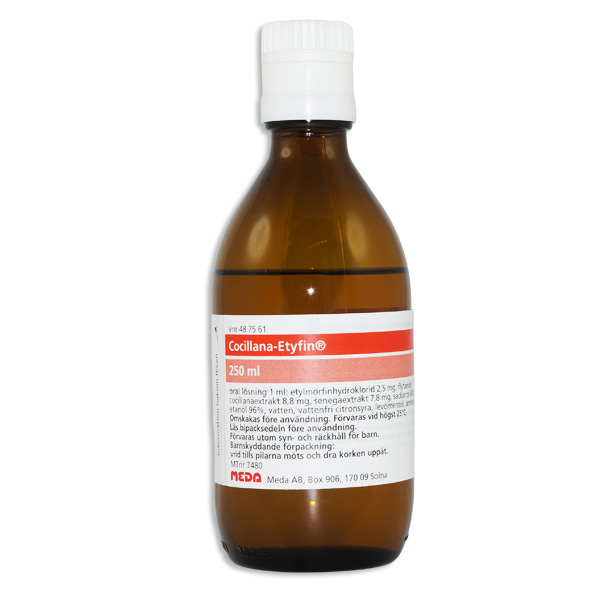
Cocillana-Etyfin-Ethylmorphine Uses, Dose, And Side Effects
Cocillana is a feature of some cough syrups. Cocillana relaxes phlegm so it can cough up. People apply cocillana root bark openly to the skin for skin tumors.
Read MoreCoAprovel – Irbesartan & Hydrochlorothiazide uses, dose and side effects
CoAprovel is a combination of two active substances, irbesartan, and hydrochlorothiazide.
Read MoreCluvot – Human coagulation factor XIII uses, dose and side effects
Cluvot consists of a white powder and a diluent which is prepared into a finished solution. The solution is given as an injection into a vein.
Read MoreClozapine Sandoz – Clozapine uses, dose and side effects
The active substance in Clozapine Sandoz is clozapine which belongs to a group of medicines called antipsychotic medicines. These are drugs used to treat specific mental illnesses such as psychosis.
Read MoreClozapine Rivopharm – Clozapine uses, dose and side effects
25 mg pale yellow to yellow, round, approximately 6.0 mm in diameter, non -coated tablets, with “FC” and “1” on each side of the scoreline on one side of the tablet and smooth on the other side. The tablet can be divided into two equal doses.
Read MoreClozapine Mylan – Clozapine uses, dose and side effects
The active substance in Clozapine Mylan is clozapine which belongs to a group of medicines called antipsychotic medicines, which are used to treat specific mental conditions e.g. psychos.
Read MoreClozapine Actavis – ClozapineShow larger uses, dose and side effects
Clozapine Actavis belongs to the type of medicine called antipsychotic medicine that acts on the central nervous system.
Read MoreClozapine Accord – Clozapine uses, dose and side effects
The active substance in Clozapine Accord is clozapine which belongs to a group of medicines called neuroleptics (medicines used to treat specific mental conditions such as psychosis ).
Read MoreCloxacillin Stragen – Cloxacillin sodium uses, dose and side effects
Cloxacillin Stragen is an antibiotic that belongs to a type of medicine called penicillinase-stable penicillins.
Read MoreCloriocard – Clopidogrel Uses, Dose, And Side Effects
Heart disease and stroke risk are decreased in high-risk individuals with Cloriocard.
Read MoreClopidogrel Teva – Clopidogrel uses, dose and side effects
Clopidogrel Teva contains clopidogrel and belongs to a group of medicines called platelet inhibitors. Platelets are very small cells in the blood, which form clots during clotting of the blood (blood clotting). By preventing this clot formation, platelet inhibitors reduce the risk of blood clots forming (a process known as thrombosis or blood clot formation).
Read MoreClopidogrel STADA – Clopidogrel uses, dose and side effects
Clopidogrel Stada contains clopidogrel and belongs to a group of medicines called platelet inhibitors. Platelets are very small cells in the blood, which form clots ( clots ) during coagulation of the blood (blood clotting). By preventing this clot formation , platelet inhibitors reduce the risk of blood clots forming (a process called thrombosisor blood clot formation).
Read MoreClopidogrel Mylan – Clopidogrel uses, dose and side effects
Clopidogrel Mylan contains clopidogrel and belongs to a group of medicines called platelet inhibitors. Platelets are very small cells in the blood, which form clots during clotting of the blood (blood clotting). By preventing this clot formation, platelet inhibitors reduce the risk of blood clots forming (a process known as thrombosis or blood clot formation).
Read MoreClopidogrel Krka – Clopidogrel uses, dose and side effects
Clopidogrel Krka contains clopidogrel and belongs to a group of medicines called platelet inhibitors. Platelets are very small cells in the blood, which form clots during clotting of the blood (blood clotting). By preventing this clot formation, platelet inhibitors reduce the risk of blood clots forming (a process known as thrombosis or blood clot formation).
Read MoreClopidogrel Aurobindo – Clopidogrel uses, dose and side effects
Clopidogrel Aurobindo contains clopidogrel and belongs to a group of medicines called platelet inhibitors. Platelets are very small cells in the blood, which form clotsduring clotting of the blood (blood clotting). By preventing this clot formation, platelet inhibitors reduce the risk of blood clots forming (a process known as thrombosis or blood clot formation).
Read MoreClopidogrel Actavis – Clopidogrel uses, dose and side effects
Clopidogrel Actavis contains clopidogrel and belongs to a group of medicines called platelet inhibitors. Platelets are very small cells in the blood, which form clots ( clots ) when the blood coagulates (blood clots). By preventing this clot formation, platelet inhibitors reduce the risk of blood clots forming (a process known as thrombosis or blood clot formation).
Read MoreClopidogrel / Acetylsalicylic acid Mylan – Acetylsalicylic acid uses, dose and side effects
Clopidogrel / Acetylsalicylic acid Mylan contains clopidogrel and acetylsalicylic acid(ASA) and belongs to a group of medicines called platelet inhibitors. Platelets are very small cells in the blood that form clots ( clots ) during coagulation of the blood (blood clotting). By preventing this clot formation in certain types of blood vessels (called arteries ), antiplatelet drugs reduce the risk of blood clots forming (a process called thrombosis ).
Read More